Tube Cutting Machines
PERFECT CUTS.
ZERO WASTE.
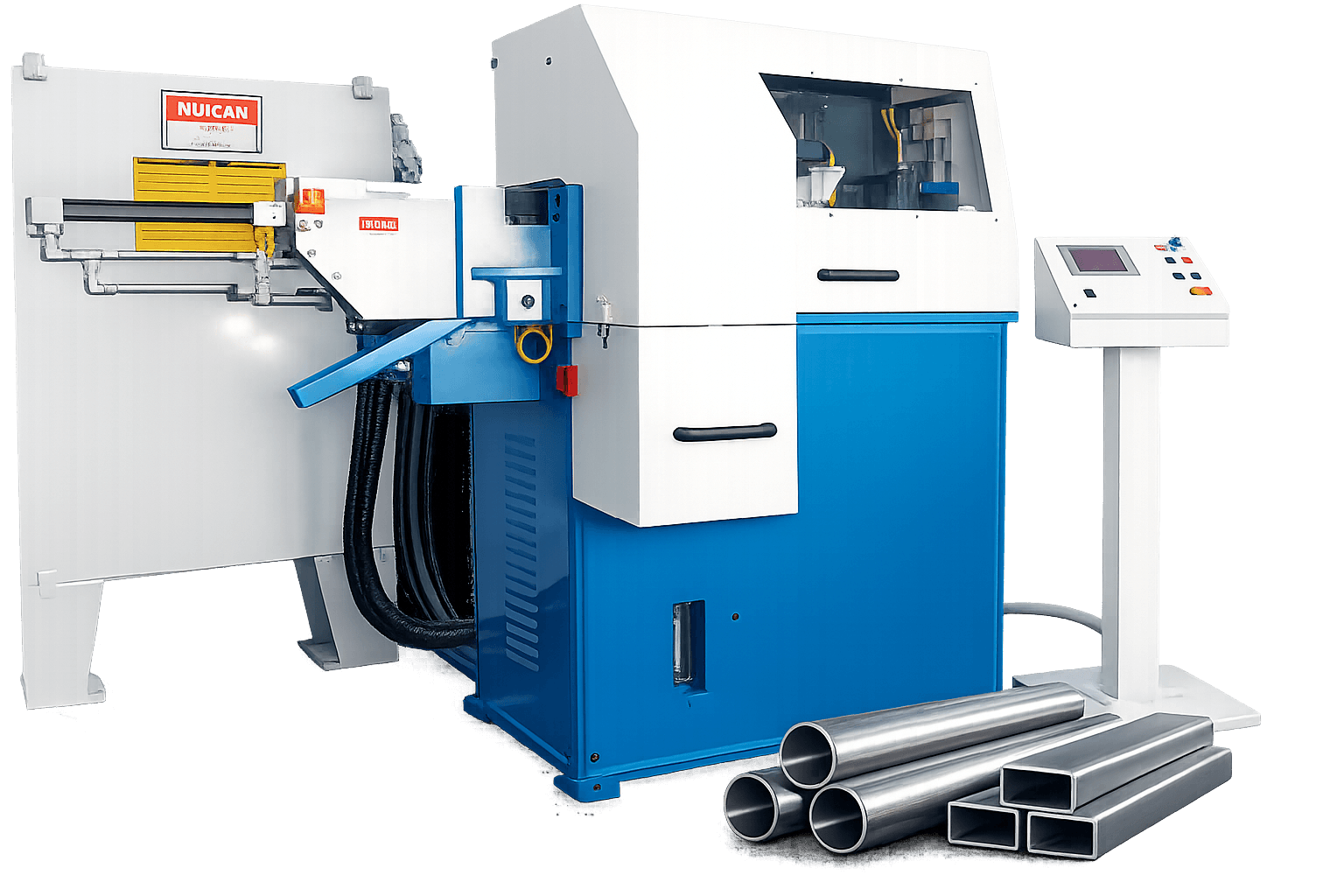
Vulcan redefined high-speed tube cutting when we introduced the first chipless supported shear tube cutting machines, setting a new standard for precision and productivity. Our machines are engineered for maximum efficiency, delivering chipless, burr-free cuts at high speeds across a variety of applications. Trusted globally, Vulcan’s Brehm technology ensures top-tier performance, enabling manufacturers to achieve outstanding results with every cut.

Wide Range
From ½” (13mm) OD to 6” (152mm) OD

Burr-free Cuts
Clean with no mess

Reliable
70+ years of manufacturing experience
Built for Precision. Built for Production
From small-diameter tubing to heavy-wall material, Vulcan machines deliver repeatable results and maximum efficiency.

High Accuracy
Engineered for tight tolerances and consistent results

Cut-Off Length
From under 1” (25mm) to 48″ (1220mm)

Fully Automatic
Increase productivity with automatic feed & bundle loading

Increase output
Fast cycle times. Minimal downtime. Maximum ROI.

Long Tool Life
Up to 250,000 cuts before sharpening
HOW IT WORKS
®BREHM SUPPORTED SHEAR TECHNOLOGY

Tube is Fully Supported
The tube is securely held by a stationary die and a movable die, supporting both the inside and outside diameters for maximum stability.

Dies Clamp the Tube
Both dies engage the tube, holding it firmly in position to prevent any movement or deformation during cutting.

Controlled Shearing Motion
The movable die advances while carrying the tube forward, shearing it against the stationary die. The movement corresponds to the tube wall thickness, creating a precise, progressive cut.

Continuous Cutting & Part Discharge
The cycle repeats seamlessly, and finished cut pieces are discharged and collected into a bin or bucket for efficient, high-speed production.
engineered FOR RESULTS
Choose your high-speed tube cutting machine
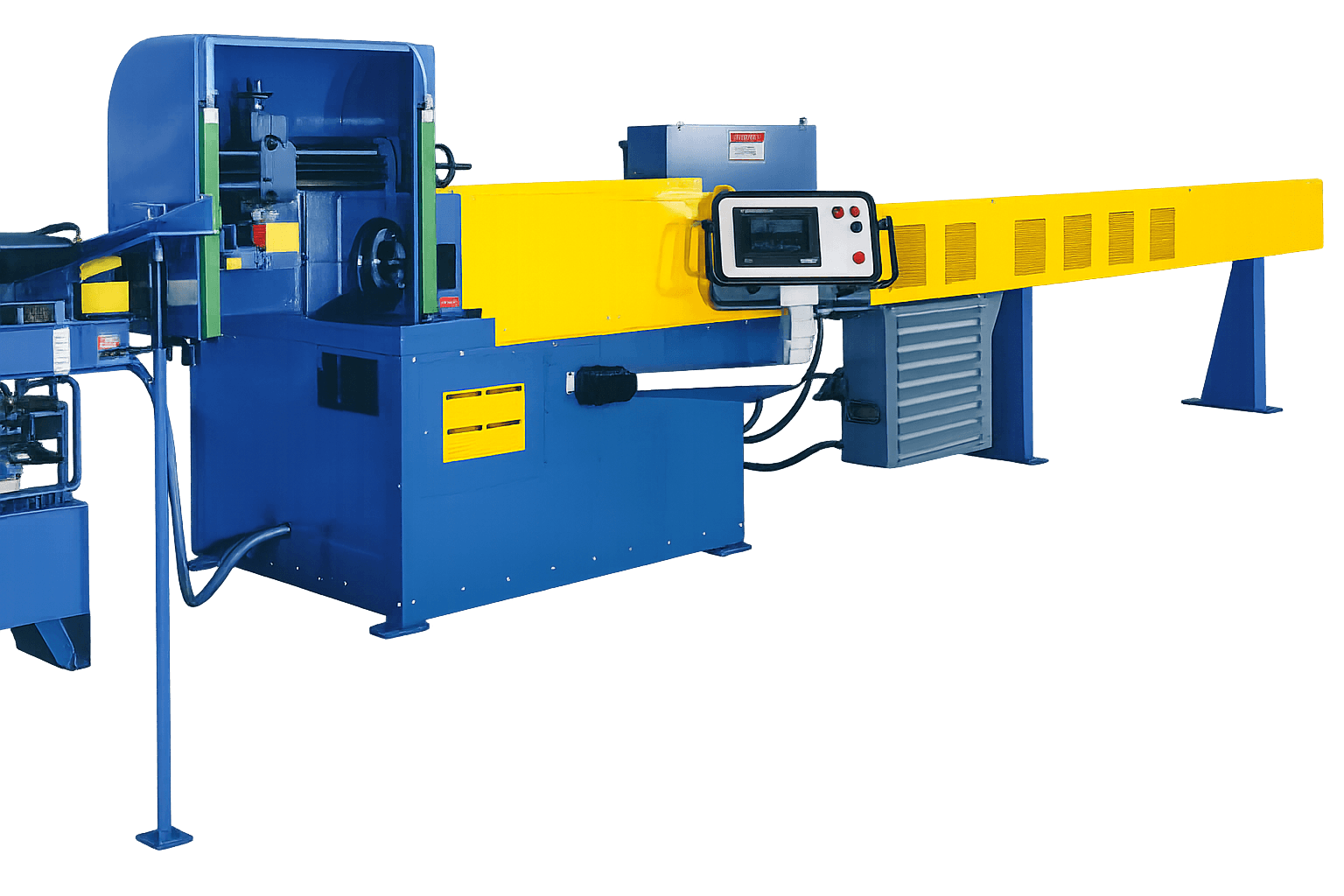
Brehm
Tube Cutting Machine
- Ideal for versatile applications & longer parts
- Diameter: up to 6″ (152 mm)
- Standard cut-off: up to 24″ (610 mm)
- Optional: 48″ (1220 mm)
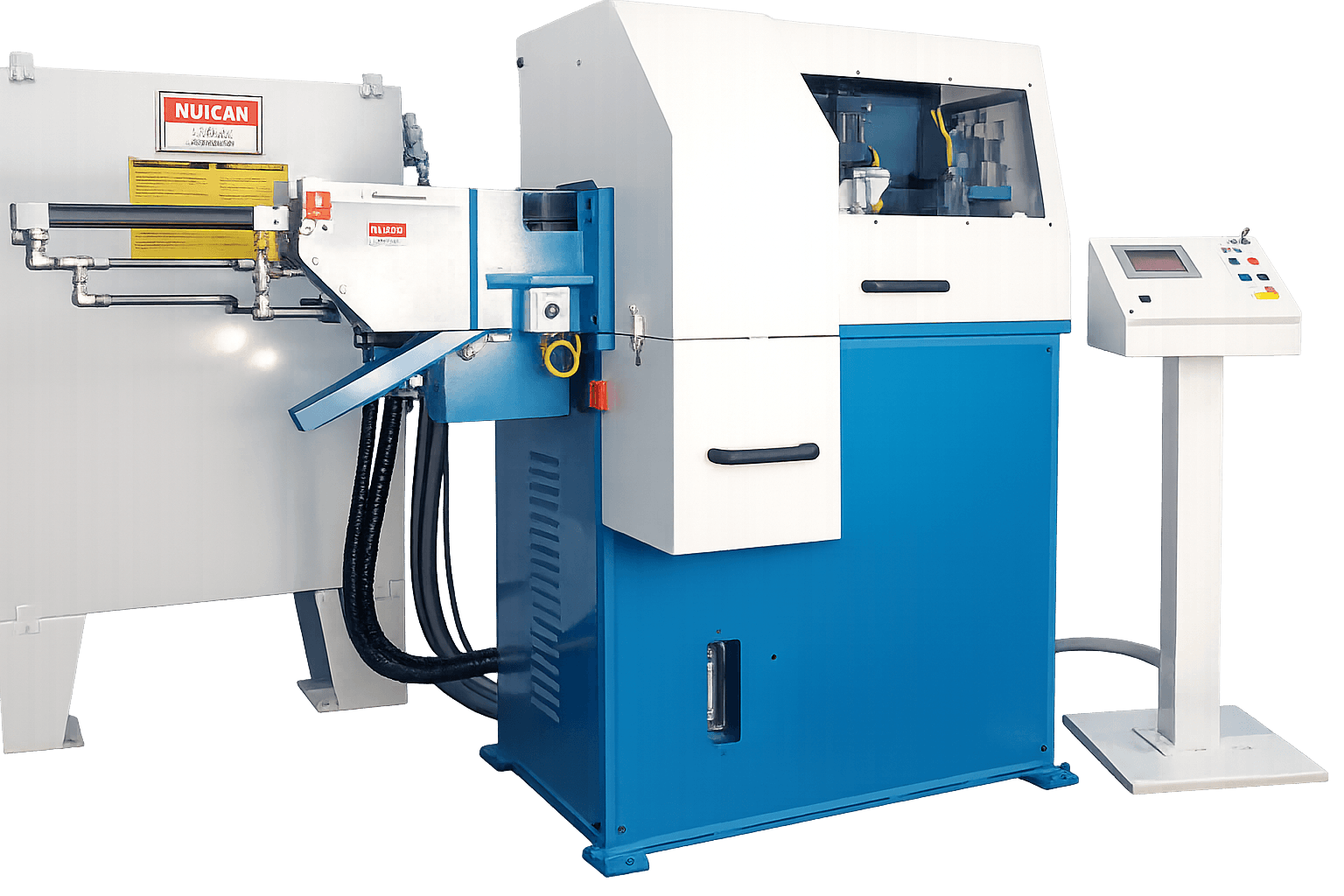
RINGMASTER
Tube Cutting Machine
- Designed for short parts & thick-wall tubing
- Diameter: up to 6″ (152 mm)
- Standard cut-off: up to 6″ (152 mm)
- Optional: 12″ (304mm)
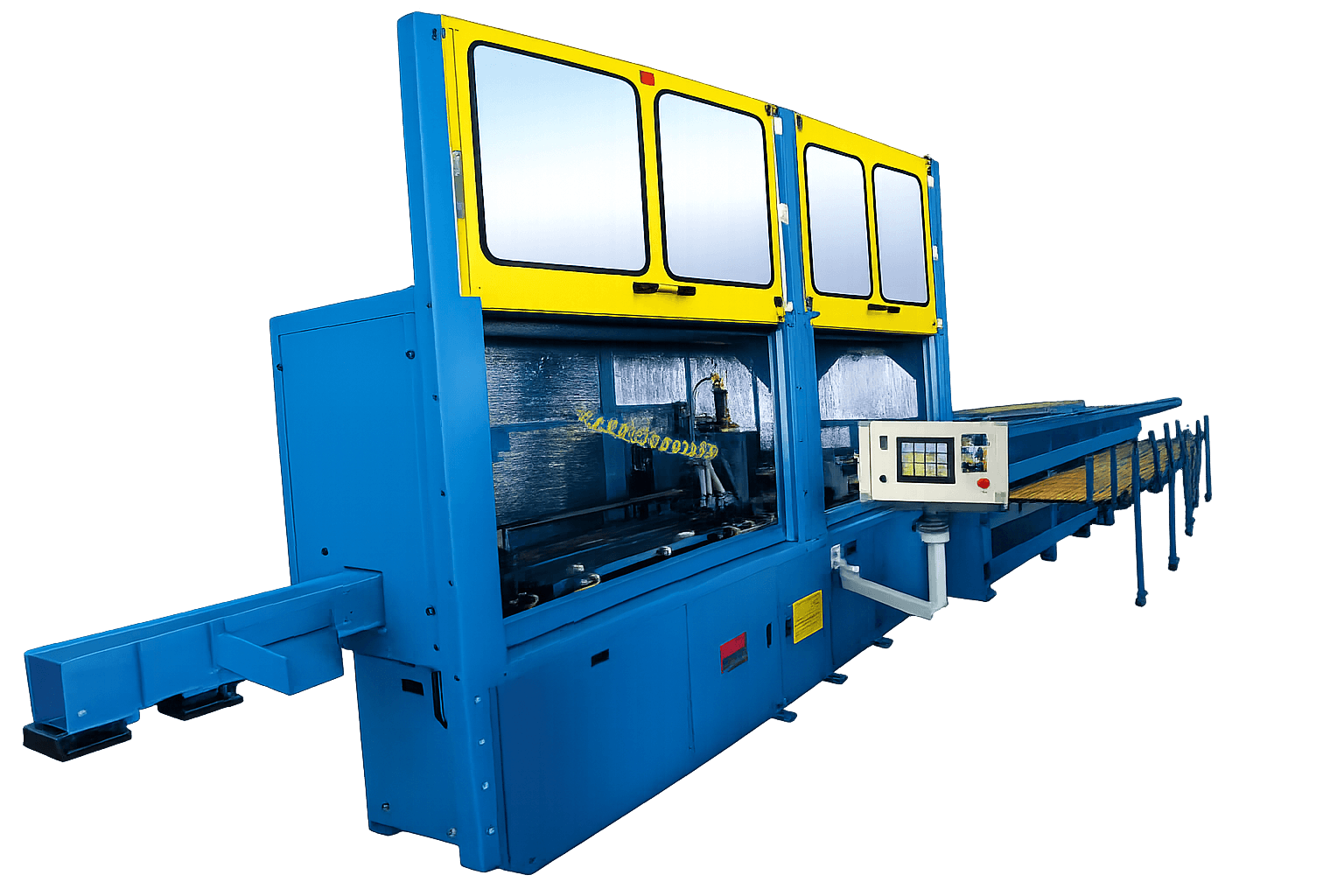
ULTIMATE
Tube Cutting Machine
- Built for high-volume, thin-wall production
- Diameter: up to 6″ (152 mm)
- Standard cut-off: up to 48″ (1220mm)
- Integrated magazine loader
Why Vulcan Tool Company?
With decades of manufacturing experience, Vulcan Tool Company provides industrial solutions built around durability, precision, and customer support. From new machinery to rebuilds and custom manufacturing, we help customers keep production moving.
GET IN TOUCH
Our team is ready to help you find the right solution for your needs.
Email: [email protected]
Phone: (937) 253-6194
70+ years of tube cutting expertise
made IN USA
ISO 9001:2015 CERTIFIED
GLOBAL INSTALLATIONS & SUPPORT
Why Customers Rebuild – and Come Back for More
See how one company refurbished their Vulcan machines and added a new one to optimize their process.
Frequently Asked Questions (FAQ)
Can Vulcan machines cut tubes without creating scrap or material loss?
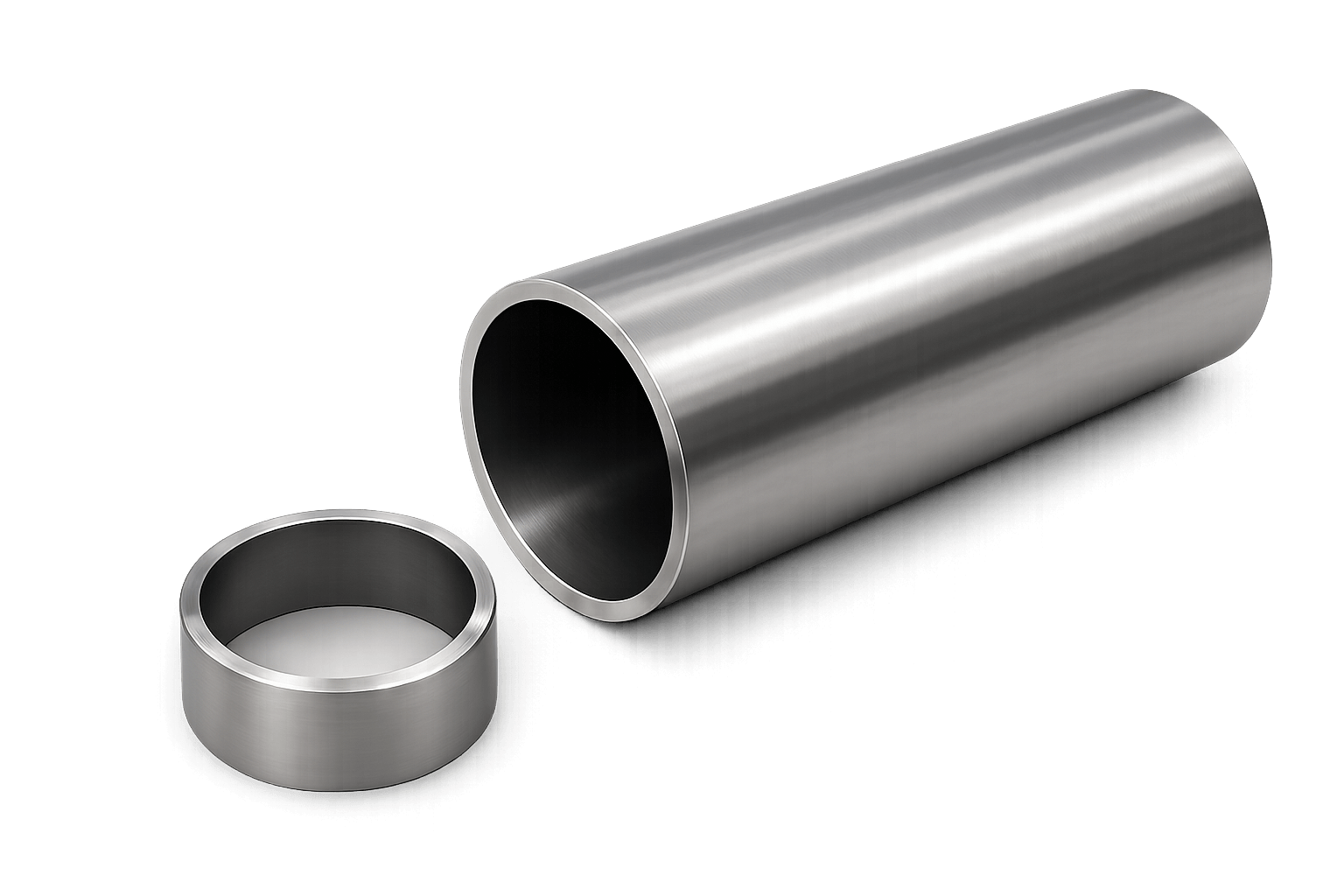
Yes. Unlike traditional cold saws or abrasive wheels that create a “kerf” (the width of the blade turned into dust/chips), Vulcan’s Brehm® and Ringmaster technology uses a chipless shearing method. There is zero material loss between cut pieces, which can lead to massive cost savings, especially when working with expensive materials like copper, stainless steel, or aluminum
What is "Supported Shear" tube cutting and how does it work?
Supported shear is a precision, chipless cutting process that uses a “scissoring” action to part tubing. Unlike a saw that “eats” material or a standard blade that “crushes” it, Vulcan’s technology uses internal and external tools (punches) to support the tube’s wall at the exact point of the cut.
One set of tools remains stationary while the other moves, shearing the tube cleanly with no material loss.
Why there is no deformation (Inside or Outside):
The secret to the “true-to-size” cut is that the tube is fully supported on the ID (inside diameter) and OD (outside diameter) by punches.
-
Because the tube is “sandwiched” between these tools, with one part stationary and one part moving, the wall cannot collapse inward or expand outward.
-
This results in a commercially burr-free finish that maintains its shape perfectly on both the inside and outside.
What is the difference between the Ringmaster and the Brehm® Tube Cutter?
The Brehm® Machine is a versatile, high-speed automatic cutter designed for a wide range of wall thicknesses and diameters (typically up to 6″ OD). It is the “all-rounder” for high-production environments.
-
The Ringmaster is specifically engineered for heavy wall-to-OD ratios. If you are cutting thick-walled tubing or small-diameter rings where maintaining the tube’s shape is difficult, the Ringmaster’s specialized tooling provides the extra support needed to prevent distortion.
What tolerances and production speeds can I expect?
Vulcan machines are capable of cutting lengths to tolerances in the thousandths of an inch. Production speeds are extremely high; for example, the Ringmaster can produce upwards of 5,000 pieces per hour (approx. 90-110 cuts per minute) depending on the material and length.
What materials and tube shapes can be cut?
Our machines can cut all commercial grades of ferrous and non-ferrous metals, including mild steel, stainless steel, copper, aluminum, and brass. While most commonly used for round tubing, the technology can also be adapted to cut square, rectangular, and other shaped profiles, as well as some solid rods.
How long does the tooling last before it needs sharpening?
Vulcan cutting tools are designed for longevity, typically producing approximately 250,000 cuts before requiring sharpening. All tooling can be resharpened in-house, significantly reducing the long-term cost of consumables compared to saw blades.