Reverse Engineering Parts with CNC Machining
When Replacement Isn’t an Option
In many industrial environments, production depends on equipment that has been running for years, or even decades. When a critical component fails, finding a replacement isn’t always straightforward. Parts may be discontinued, suppliers may no longer exist, or lead times may be too long to justify waiting.
This is where reverse engineering machining becomes a practical and often essential solution.
Instead of replacing entire systems or redesigning assemblies, companies can duplicate parts using CNC machining, restoring functionality quickly and efficiently.
What Reverse Engineering Really Means in Modern Manufacturing
Reverse engineering is more than simply copying a part. It is a precise engineering process that involves analyzing an existing component and recreating it using modern tools, materials, and machining capabilities.
In today’s manufacturing environment, reverse engineering is often used to:
-
-
Recreate obsolete or discontinued parts
-
Replace worn or damaged components
-
Support legacy equipment with no OEM backing
-
Improve part performance through design adjustments
-
With advanced CNC machining, it is possible to recreate old parts with a level of accuracy and consistency that often meets, or exceeds the original.
Why More Companies Are Turning to CNC-Based Reverse Engineering
As supply chains become more unpredictable and equipment lifecycles extend, reverse engineering is no longer a last resort, it’s a strategic advantage.
Reduced Downtime
Waiting weeks for a replacement part is not always acceptable. Reverse engineering allows businesses to restore operations faster by manufacturing parts locally.
Independence from OEMs
Relying on original manufacturers can be limiting, especially when parts are discontinued or heavily marked up. Reverse engineering provides flexibility and control.
Cost Efficiency
In many cases, recreating a single part is significantly more cost-effective than replacing an entire assembly or system.
Opportunity for Improvement
Modern machining techniques allow for subtle design enhancements, improving durability, fit, or performance compared to the original component.
Precision Is What Makes It Work
The success of reverse engineering depends on more than simply replicating dimensions, it requires a high level of precision, consistency, and process control. A recreated part must integrate seamlessly into an existing assembly and perform reliably under real operating conditions.
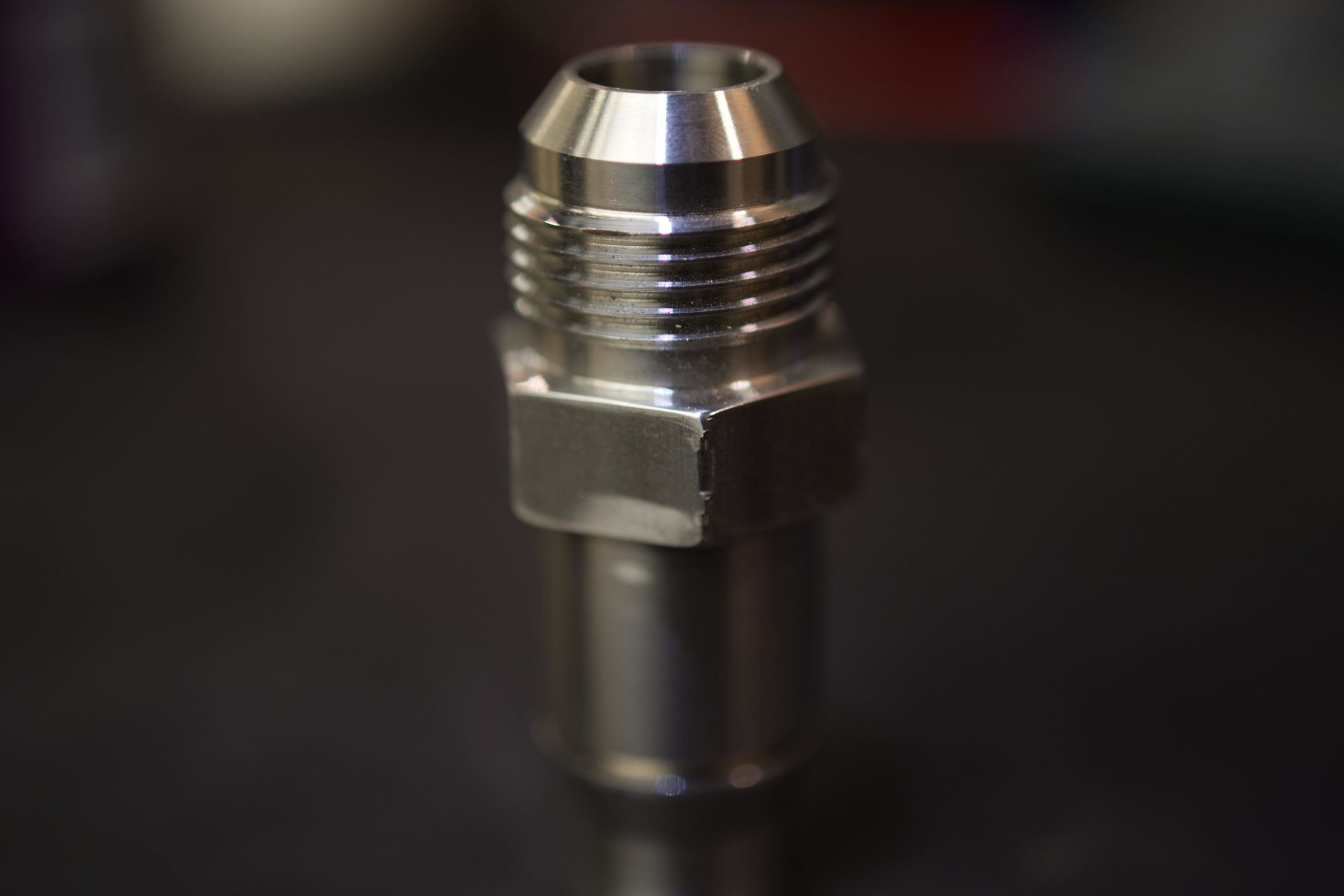
Precision CNC machining makes this possible by achieving tight tolerances, repeatability, and dependable surface finishes. Just as important is a structured quality system. Adherence to ISO 9001 quality standards ensures that each component is manufactured, inspected, and documented to meet strict requirements for accuracy and performance.
This is where precision CNC machining plays a critical role.
Tight tolerances, repeatability, and material expertise ensure that reverse-engineered parts:
-
Fit correctly within assemblies
-
Withstand operational stresses
-
Maintain long-term performance
Without precision, duplication becomes guesswork. With it, reverse engineering becomes a dependable solution.
Common Applications Across Industries
Reverse engineering is widely used across industries where equipment reliability is critical and downtime is costly.
Typical applications include:
-
-
Industrial machinery and production equipment
-
Hydraulic and mechanical components
-
Tooling and fixtures
-
Automotive and heavy equipment parts
-
Legacy systems with limited documentation
-
In each case, the ability to duplicate parts with CNC machining provides a practical path forward when traditional sourcing is no longer viable.
Not Just Duplication, A Modern Manufacturing Approach
One of the biggest misconceptions is that reverse engineering is simply about copying old designs. In reality, it is an opportunity to apply modern manufacturing knowledge to existing challenges.
With the right expertise, reverse engineering can:
-
Address known failure points
-
Improve material selection
-
Enhance manufacturability
-
Extend the lifespan of critical components
This transforms reverse engineering from a reactive fix into a proactive engineering solution.
The Value of Experience in Reverse Engineering
Not all reverse engineering projects are straightforward. Worn parts, missing dimensions, and unknown materials require more than just equipment—they require experience and judgment.
A capable machining partner understands how to:
-
-
Interpret incomplete or damaged components
-
Apply appropriate tolerances
-
Select materials based on real-world application
-
Ensure functional accuracy, not just visual similarity
-
This level of expertise is what separates a successful part recreation from a costly failure.
Conclusion
Reverse engineering with CNC machining has become an essential capability in modern manufacturing. It allows companies to overcome supply limitations, reduce downtime, and maintain critical operations—even when original parts are no longer available.
More importantly, it offers a smarter way to approach aging equipment: not by replacing it, but by improving and sustaining it.
Let’s Talk About Your Project
If you need to recreate a part, duplicate a component, or restore critical equipment, Vulcan Tool Company has the experience and precision machining capabilities to deliver reliable results.